Easy Rice Cooker Mango Sticky Rice Recipe | Thai Dessert
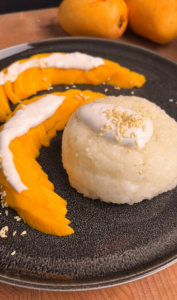
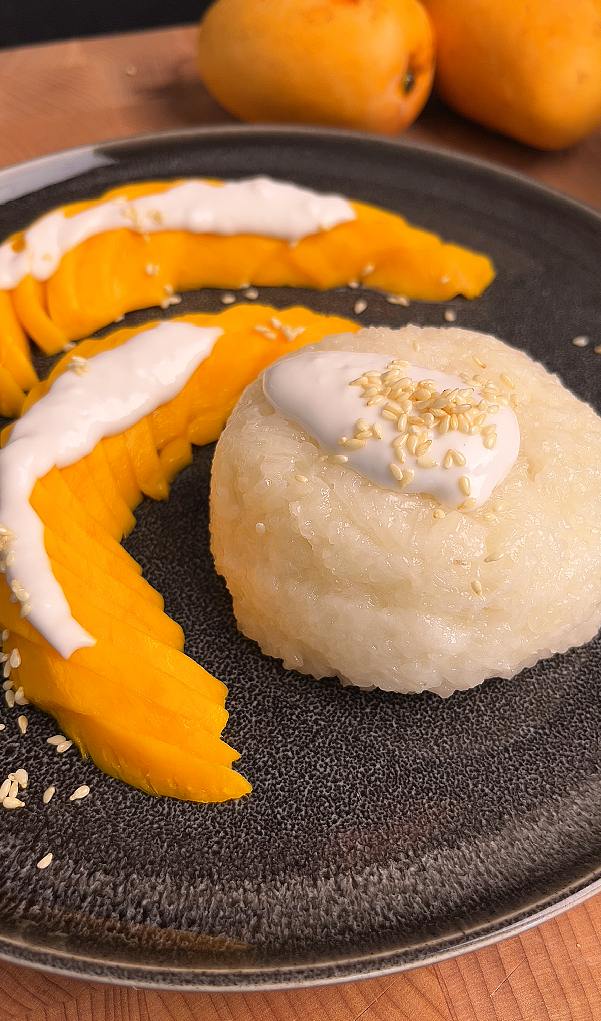
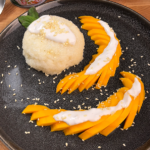
This easy mango sticky rice recipe is a simple way to make one of Thailand’s most iconic desserts at home and you don’t even need a steamer!
Made with sweet, chewy glutinous rice, rich coconut milk, ripe mango, and a lightly salted coconut sauce, this Thai mango sticky rice comes together easily using your rice cooker.
It’s a simple dessert that feels impressive enough for guests but is easy enough to make whenever you’re craving something sweet.
Heads up: This post contains affiliate links. That means I may earn a small commission if you buy through them — at no extra cost to you. Thanks for supporting Drew Eats!
What Is Mango Sticky Rice?
Mango sticky rice is a classic Thai dessert made with glutinous sticky rice, fresh mango, and sweetened coconut milk.
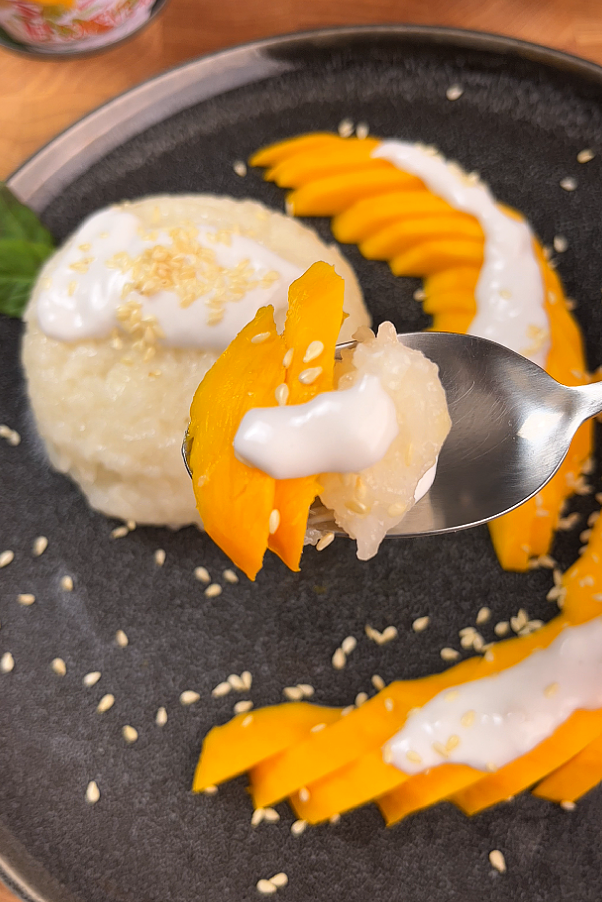
The combination is simple but incredibly good. The warm sticky rice absorbs the creamy coconut milk, creating a rich, slightly chewy texture that pairs perfectly with sweet, juicy mango.
A small amount of salt in the coconut sauce is important because it balances the sweetness and brings out the flavor of both the coconut and mango.

Why Make Mango Sticky Rice in a Rice Cooker?
Traditional Thai sticky rice is often steamed, but a rice cooker makes this dessert much more approachable for a home kitchen.
There’s no need for a special steamer basket or complicated setup. Once the rice is rinsed, you can cook it directly in your rice cooker and finish it with the sweet coconut mixture.
The key is using glutinous rice (sticky rice) rather than regular jasmine rice. Regular rice won’t give you the characteristic chewy, sticky texture needed for this dessert.

The Secret: Two Coconut Cream Sauces
The key to really good mango sticky rice is making two separate batches of coconut cream!
The first is the sweet coconut cream that gets mixed directly into the warm sticky rice. As the rice rests, it absorbs the coconut cream, becoming rich, creamy, and lightly sweet throughout.
The second is a salted coconut cream sauce that gets spooned over the finished sticky rice just before serving. Unlike the first batch, this sauce is intentionally more savory, with a touch of salt to balance the sweetness of the mango and coconut rice.
It might seem like an extra step, but the two sauces serve completely different purposes. The first flavors the rice from the inside, while the second adds a creamy, salty finish on top.
That contrast between sweet coconut sticky rice, juicy mango, and salty coconut cream is what makes mango sticky rice so addictive.

Tips for the Best Mango Sticky Rice
Use glutinous rice.
- This recipe needs Thai sticky rice, also called glutinous rice or sweet rice. Regular jasmine rice won’t produce the same chewy texture.
Mix the coconut milk into warm rice.
- The rice absorbs the coconut mixture much more effectively while it’s still warm.
Don’t boil the coconut milk.
- Gently warming the coconut milk is enough to dissolve the sugar. Boiling can cause the coconut milk to separate!
Choose ripe mangoes.
- The mango should be sweet, fragrant, and juicy. Since the ingredient list is relatively short, the quality of the mango makes a big difference.
Adjust the sweetness.
- If your mangoes are particularly sweet, you can slightly reduce the sugar in the coconut sauce.

What to Serve With Mango Sticky Rice
Mango sticky rice is traditionally enjoyed as a dessert, but it’s also a great addition to a Thai-inspired dinner.
Serve it after dishes like:
- Thai green curry
- Pad Thai
- Thai basil chicken
- Tom yum soup
- Thai grilled chicken
The sweet, creamy coconut rice and fresh mango make a refreshing finish to a savory meal.

Storage and Reheating
Store the sticky rice and mango separately in airtight containers in the refrigerator.
The sticky rice is best enjoyed within 2–3 days, although the texture is best on the day it’s made.
Keep the mango refrigerated separately and slice it just before serving.
The salted coconut topping can also be stored separately and gently rewarmed before serving.
Other Great Meal Prep Recipes
Frequently Asked Questions
Can you make mango sticky rice in a rice cooker?
- Yes. While traditional Thai sticky rice is often steamed, you can use a rice cooker to make a convenient home version. The most important steps are soaking the glutinous rice beforehand and allowing the cooked rice to absorb the sweet coconut cream while warm.
What kind of rice do you use for mango sticky rice?
Use glutinous rice, also known as sticky rice or sweet rice. It has a naturally chewy texture that makes it ideal for mango sticky rice.
Why do you use two coconut sauces?
The sweet coconut mixture is absorbed into the warm sticky rice, while the salted coconut cream is served as a topping. Keeping them separate creates a better balance of sweet, creamy, and salty flavors.
Can I use jasmine rice instead of sticky rice?
It’s not recommended. Jasmine rice has a different starch content and texture, so it won’t produce the characteristic chewy consistency of Thai mango sticky rice.
Ingredients
For the Sticky Rice
200 g white glutinous rice
Water for cooking
For the Sweet Coconut Cream
80 ml coconut milk
50 ml water
50 g sugar
- Light sprinkle of salt
For the Salted Coconut Cream
50 ml coconut milk
1/8 tsp salt
1 tsp rice flour
1 tbsp water
For Serving
Ripe mangoes
Toasted sesame seeds, for garnish
Step by step instructions
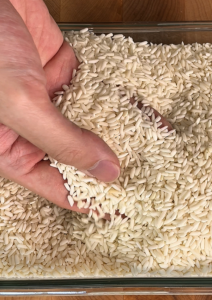
1. Wash the Glutinous Rice
Measure out your glutinous rice and rinse several times until the water runs mostly clear. Drain the rice thoroughly.
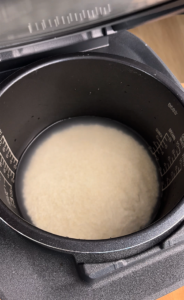
2. Cook the Sticky Rice in a Rice Cooker
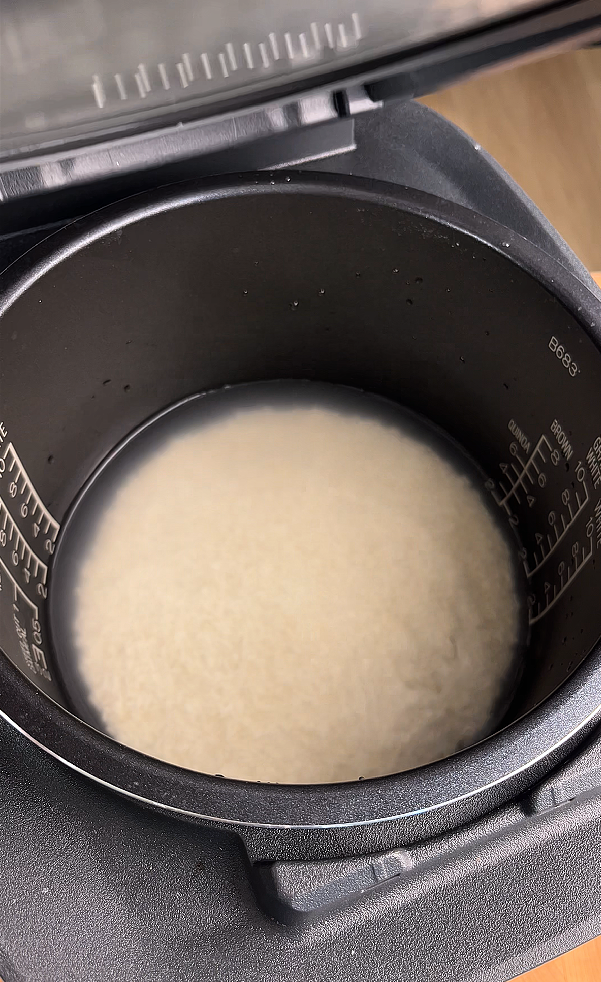
Transfer the drained glutinous rice to your rice cooker.
Add enough water according to your rice cooker’s instructions for cooking sticky or glutinous rice. If your rice cooker doesn’t have a dedicated sticky-rice setting, use its regular white-rice setting and check the rice once the cooking cycle is complete.
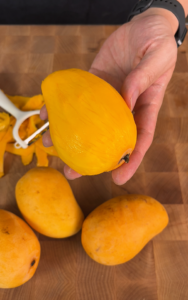
3. Prepare the Mango
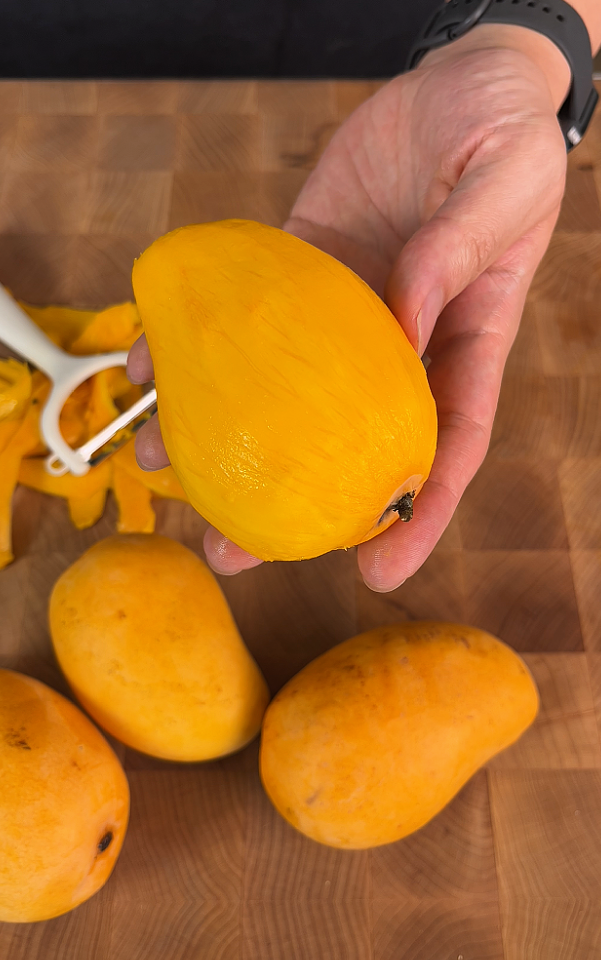
Peel your ripe mangoes and slice them into thin pieces or bite-sized chunks.
The mango is an important part of the dish, so use fruit that’s ripe, sweet, and juicy. If the mango is underripe or tart, it won’t provide the same contrast against the creamy coconut sticky rice.
4. Make the Sweet Coconut Cream
The first coconut mixture is the most important because this is what flavors the sticky rice.
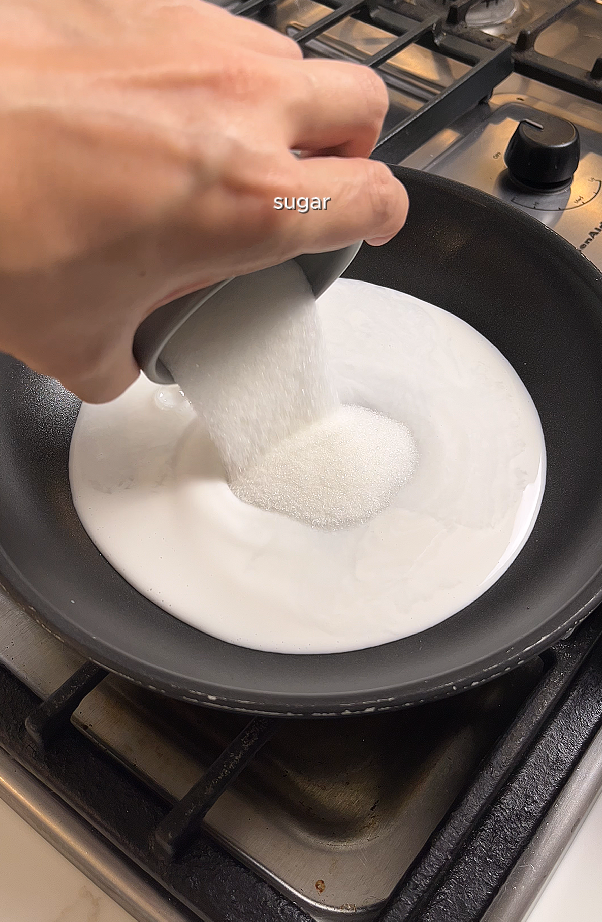
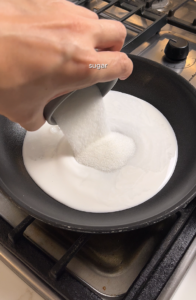
In a small saucepan, combine coconut milk, water, sugar and a small amount of salt. Warm the mixture over low heat, stirring until the sugar has completely dissolved.
Don’t bring the coconut milk to a boil. Once the mixture is smooth and warmed through, remove it from the heat.
5. Let the Rice Absorb the Coconut Cream
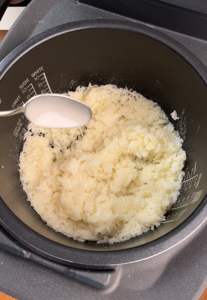
While the rice is still warm, gradually pour in the sweet coconut cream and gently fold it through the rice. Give the rice time to absorb the coconut mixture. Let it rest for approximately 15–20 minutes while you make the second batch of coconut cream.
6. Make the Salted Coconut Cream
While the rice is resting, prepare the second coconut mixture.
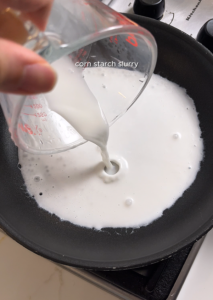
In a small saucepan, combine coconut milk and salt. In a small dish, combine 1 teaspoon of rice flour with 1 tablespoon of water.
Warm the coconut milk and salt over low heat, then slowly stir in the rice flour mixture. Continue stirring until the coconut cream thickens slightly.
7. Assemble the Mango Sticky Rice
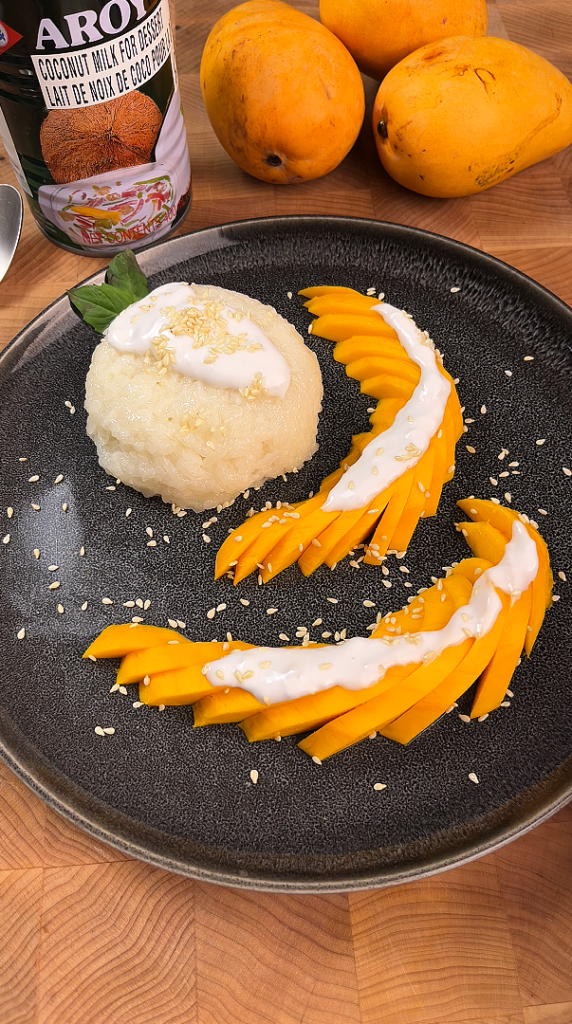
Spoon the coconut-infused sticky rice onto a serving plate.
Arrange the sliced mango alongside the rice, then drizzle the salted coconut cream over the sticky rice.
Finish with a sprinkle of toasted sesame seeds.
Easy Rice Cooker Mango Sticky Rice Recipe | Thai Dessert
Ingredients
For the Sticky Rice
- 200 g white glutinous rice
- Water for cooking
For the Sweet Coconut Cream
- 80 ml coconut milk
- 50 ml water
- 50 g sugar
- Light sprinkle of salt
For the Salted Coconut Cream
- 50 ml coconut milk
- 1/8 tsp salt
- 1 tsp rice flour
- 1 tbsp water
For Serving
- Ripe mangoes
- Toasted sesame seeds for garnish
Instructions
Wash the Glutinous Rice
- Measure out your glutinous rice and rinse several times until the water runs mostly clear. Drain the rice thoroughly.

Cook the Sticky Rice in a Rice Cooker
- Transfer the drained glutinous rice to your rice cooker.
- Add enough water according to your rice cooker's instructions for cooking sticky or glutinous rice. If your rice cooker doesn't have a dedicated sticky-rice setting, use its regular white-rice setting and check the rice once the cooking cycle is complete.
Prepare the Mango
- Peel your ripe mangoes and slice them into thin pieces or bite-sized chunks.
- The mango is an important part of the dish, so use fruit that's ripe, sweet, and juicy. If the mango is underripe or tart, it won't provide the same contrast against the creamy coconut sticky rice.
Make the Sweet Coconut Cream
- The first coconut mixture is the most important because this is what flavors the sticky rice.
- In a small saucepan, combine coconut milk, water, sugar and a small amount of salt. Warm the mixture over low heat, stirring until the sugar has completely dissolved.
- Don't bring the coconut milk to a boil. Once the mixture is smooth and warmed through, remove it from the heat.
Let the Rice Absorb the Coconut Cream
- While the rice is still warm, gradually pour in the sweet coconut cream and gently fold it through the rice. Give the rice time to absorb the coconut mixture. Let it rest for approximately 15–20 minutes while you make the second batch of coconut cream.
Make the Salted Coconut Cream
- While the rice is resting, prepare the second coconut mixture.
- In a small saucepan, combine coconut milk and salt. In a small dish, combine 1 teaspoon of rice flour with 1 tablespoon of water.
- Warm the coconut milk and salt over low heat, then slowly stir in the rice flour mixture. Continue stirring until the coconut cream thickens slightly.
Assemble the Mango Sticky Rice
- Spoon the coconut-infused sticky rice onto a serving plate.
- Arrange the sliced mango alongside the rice, then drizzle the salted coconut cream over the sticky rice.
- Finish with a sprinkle of toasted sesame seeds.