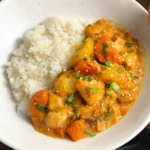
Easy Rice Cooker Japanese Curry Recipe (One-Pot Recipe)
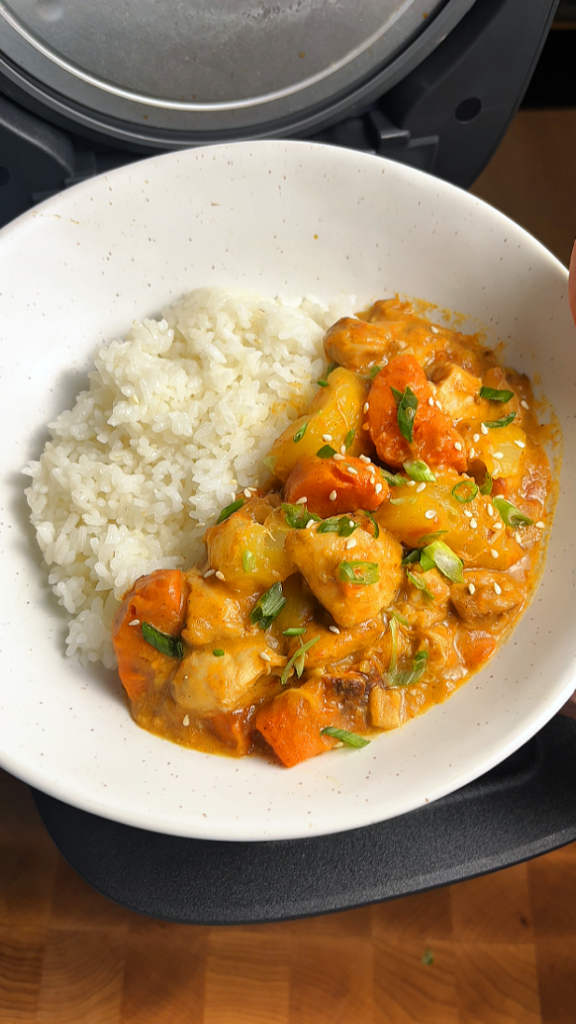
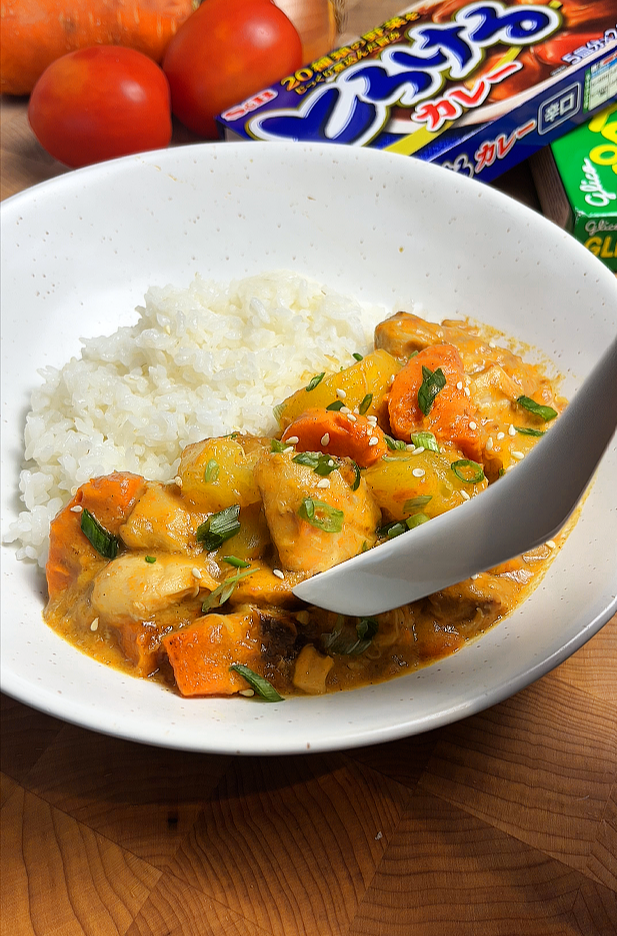
There is something dangerously comforting about Japanese curry rice after a long day. Thick, rich curry sauce poured over hot rice, tender chunks of chicken, and soft potatoes that melt into the broth, it is the kind of meal that makes you want seconds immediately.
This easy rice cooker Japanese curry recipe is my lazy-day version of the classic. Everything cooks in one pot with minimal effort, while the rice cooker does most of the work. The coconut milk makes the curry extra creamy and rich without overpowering the classic Japanese curry flavor.
If you love cozy, low-effort comfort food, this one is going to become part of your regular dinner rotation!
Heads up: This post contains affiliate links. That means I may earn a small commission if you buy through them — at no extra cost to you. Thanks for supporting Drew Eats!
What Is Japanese Curry?
Japanese curry is a thick, mildly spiced curry dish commonly served over rice. Unlike Thai or Indian curries, Japanese curry is usually sweeter, richer, and more stew-like in texture.
You have complete freedom on what to add to your curry, but common ingredients include:
- onions
- carrots
- potatoes
- protein like chicken or beef
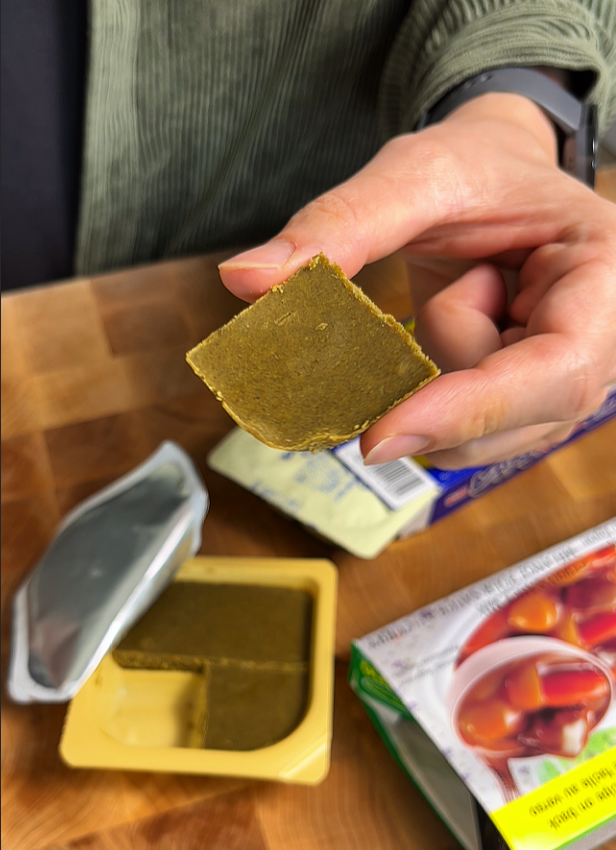
What makes Japanese curry so approachable for home cooking is the curry cubes. These concentrated blocks are packed with spices, seasonings, and roux, all in one convenient cube. Once melted into water, they create the thick, rich curry sauce Japanese curry is known for.
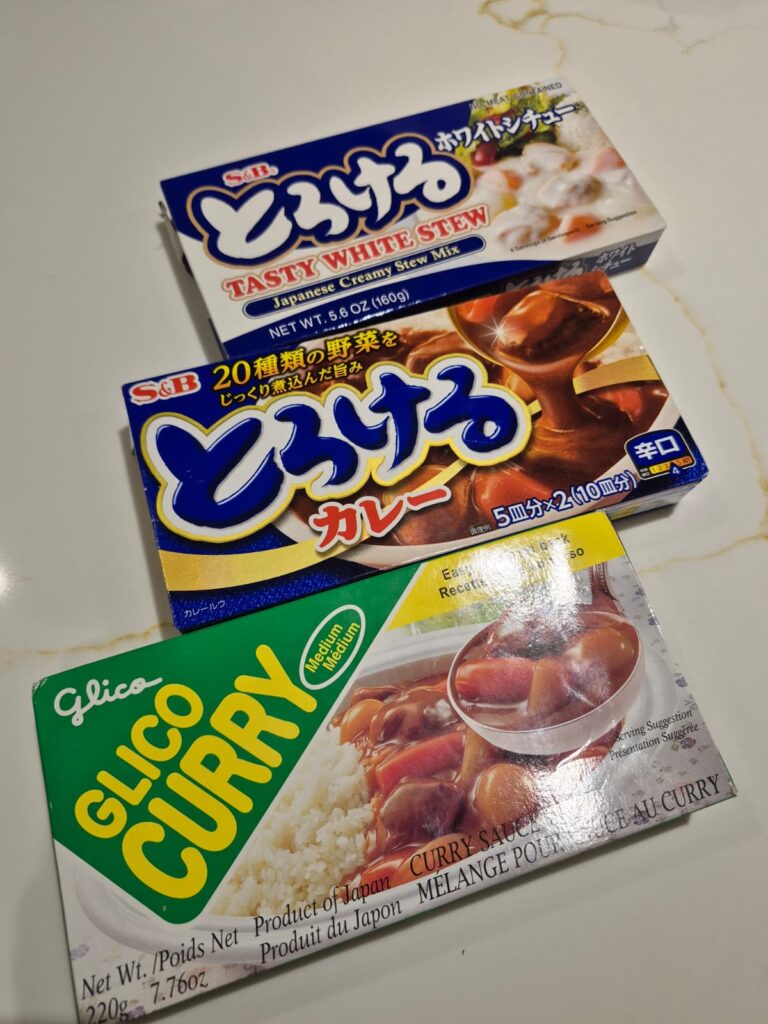
Popular brands like S&B, Golden Curry and Vermont Curry are pantry staples because they make homemade Japanese curry incredibly easy, beginner-friendly, and consistently delicious!

Why Making Japanese Curry in a Rice Cooker Works So Well
Rice cookers are PERFECT for Japanese curry.
Usually, it is simmered gently in a pot over time. Using the rice cooker creates a really forgiving cooking environment where you just hit “COOK” while all the ingredients cook to perfection with minimal effort. This is the one I have been using for these rice cooker recipes that come out perfectly everytime.
Everything cooks together in one pot, which means less cleanup and less active cooking.
The potatoes naturally thicken the curry slightly while the curry roux melts into the broth, creating that classic smooth Japanese curry texture.
Adding coconut milk makes the sauce even creamier and gives the curry a richer finish without needing extra work.

Why You’ll Love This Rice Cooker Japanese Curry Recipe
One-pot meal
- Everything cooks directly in the rice cooker for easy cleanup.
Beginner friendly
- Very hard to mess up, even if you do not cook often.
Rich and comforting
- The curry becomes thick, creamy, and perfect over rice.
Great for meal prep
- Japanese curry reheats extremely well and tastes even better the next day.
Flexible ingredients
- You can swap the chicken or vegetables based on what you have at home.
Minimal active cooking
- Once everything goes into the rice cooker, the hard part is basically done.

What Makes Japanese Curry Different From Other Curries?
One of the biggest differences is texture.
Japanese curry is usually:
- thicker
- sweeter
- less spicy
- more stew-like
Compared to Thai curries, which are lighter and more broth-based, Japanese curry feels heartier and more comforting.
The curry cubes also make Japanese curry very approachable and convenient for home cooking because the seasoning and thickening are already built into the cubes. There are many brands available and this is my favorite one on the market!

Tips for the Best Rice Cooker Japanese Curry
Cut vegetables evenly
- This helps everything cook at the same speed.
Do not overfill the rice cooker
- While tempting to make a 5-day-worth batch and eat it for the week, leave enough room for the curry to simmer safely.
Add extra water if needed
- Different curry cube brands thicken differently. Add water towards the end of the cooking process if it is too thick
Stir near the end
- This helps the curry cubes melt evenly into the sauce.
Use chicken thighs if possible
- They stay juicy and become more tender during cooking. Chicken breast can work but may dry out depending on the cook time. Of course, you can also use other proteins such as beef or pork.

Best Vegetables for Japanese Curry Rice
Japanese curry is very flexible and versatile when it comes to vegetables.
For this version, I used:
- potatoes
- carrots
- onions
- tomatoes
The potatoes help naturally thicken the curry while the onions slowly soften into the sauce as it cooks.
Tomatoes are not always traditional, but they add a slight acidity that balances the richness really nicely.
Other vegetables that work well:
- mushrooms
- corn
You can honestly clean out your fridge with curry recipes like this!

More Easy Rice Cooker Recipes to Try
Once you start using your rice cooker for cooking things beside just rice, it’s hard to go back. It’s one of the easiest ways to make quick, low-effort dishes without sacrificing flavor.
Here are a few ideas to try next:
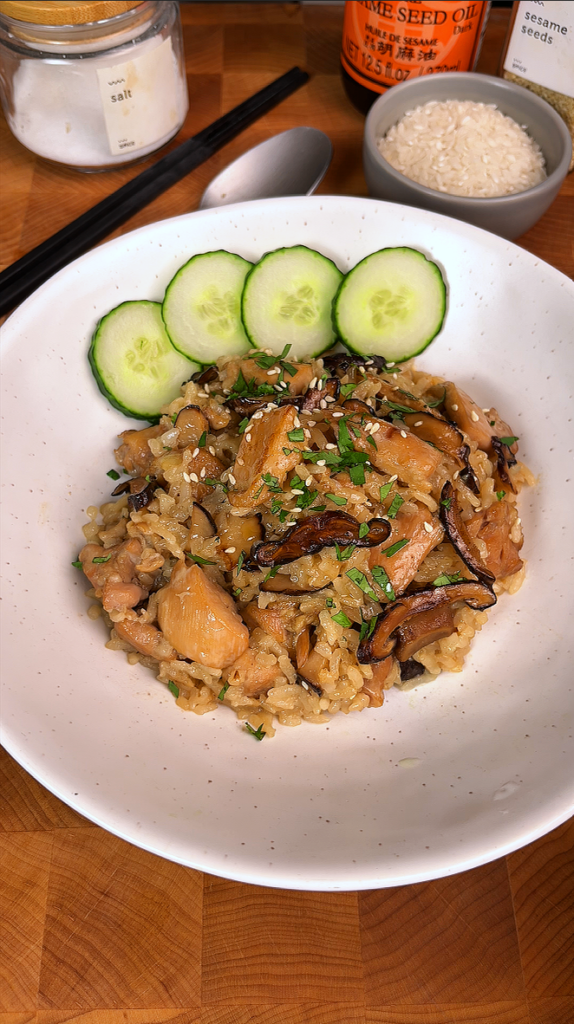
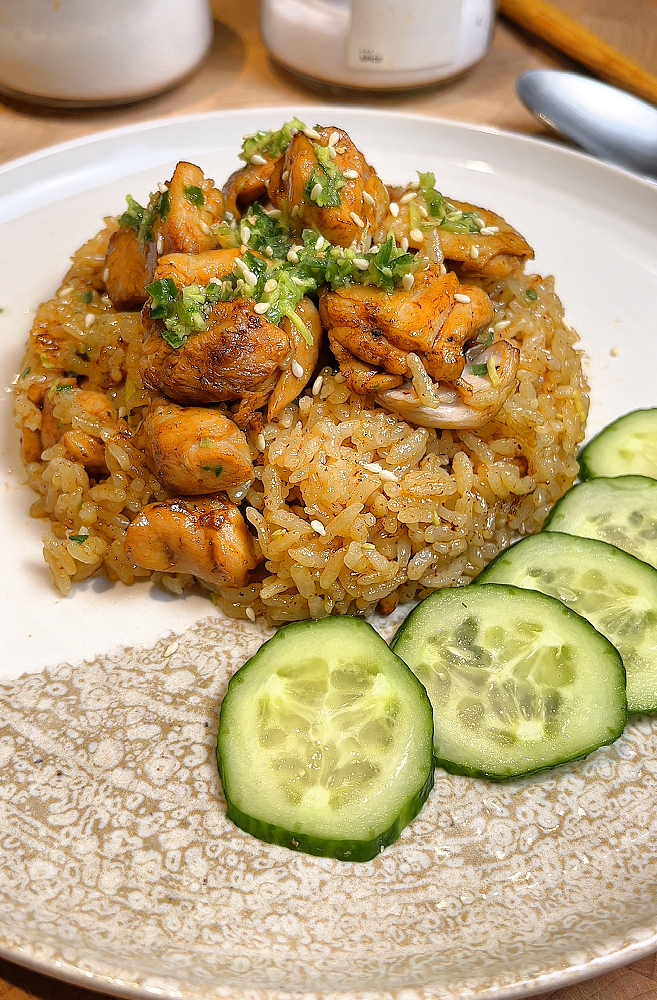
- Rice Cooker Chicken Rice with Scallion Oil
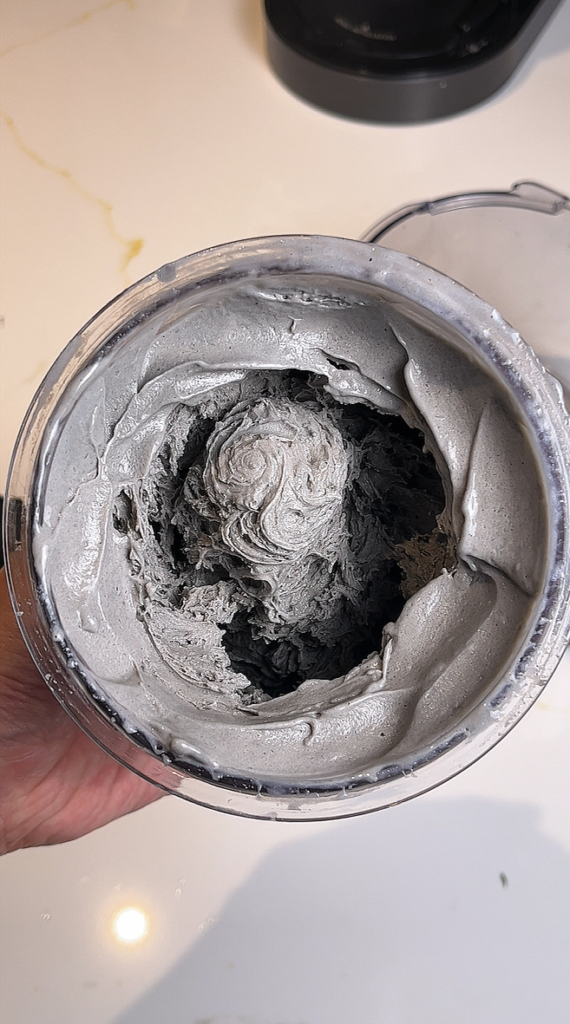
- Cantonese Black Sticky Rice Dessert
- Easy Rice Cooker Congee
They all follow the same idea. Minimal prep, one pot, and really solid results every time!
Meal Prep and Storage Tips
Japanese curry might actually taste BETTER the next day.
As the curry sits overnight, the flavors deepen and the sauce thickens slightly, making it incredibly good for meal prep.
Refrigerator
- Store in airtight containers for up to 4 days.
Freezer
- Freeze for up to 2 months.
Reheating
- Add a splash of water before reheating because the curry thickens significantly in the fridge.
Serve with fresh rice for the best texture.

More Easy Rice and Curry Recipes
Frequently Asked Questions
Can you make Japanese curry in a rice cooker?
Yes! Rice cookers work very well for Japanese curry because they gently simmer the ingredients while keeping the chicken tender and the vegetables soft.
Can I use chicken breast instead of thighs?
Yes, but chicken thighs stay juicier and are more forgiving during cooking.
Why add coconut milk to Japanese curry?
Coconut milk adds creaminess and richness while balancing the curry spices. It gives the sauce a smoother texture.
Can I freeze Japanese curry?
Yes. Japanese curry freezes very well for up to 2 months.
Ingredients
Chicken
- 4 boneless chicken thighs, cubed
- 1 tbsp soy sauce
- 1 tsp white pepper
Vegetables
- 1 whole red carrot, chopped
- 1 large onion, diced
- 3 small potatoes, cubed
- 2 small whole tomatoes
- 2 cloves garlic, diced
Curry
- 2 cubes Japanese curry cubes
- 2 cups water
- 1/2 can full-fat coconut milk
Step by step instructions
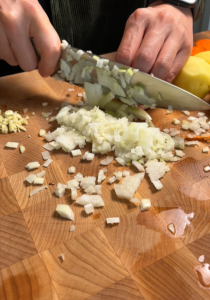
1. Prep the vegetables
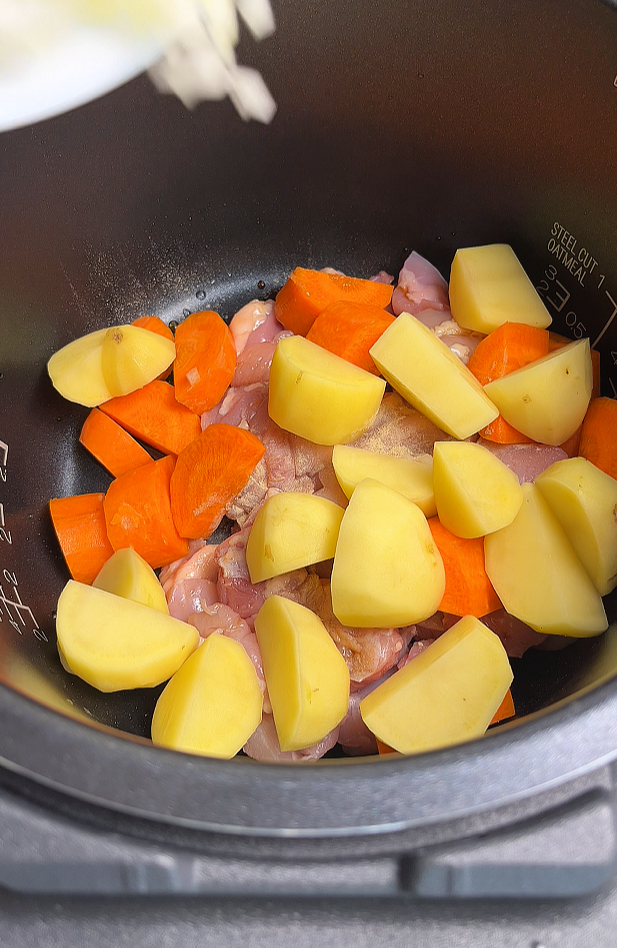
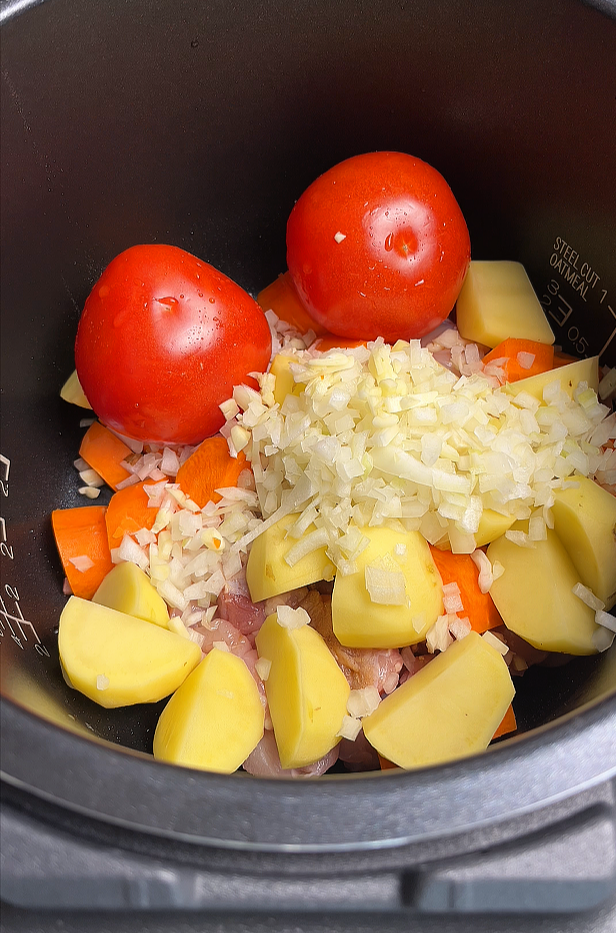
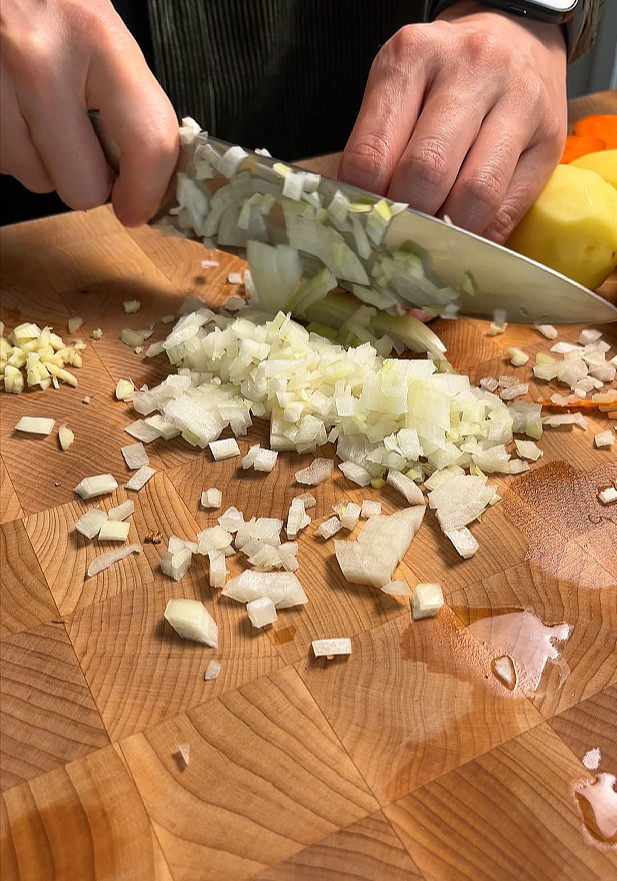
Cut the carrots and potatoes into large bite-sized pieces. Dice onions and garlic, and leave the tomatoes whole. Alternatively, use any vegetables of your choice.
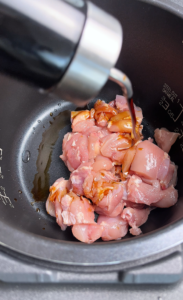
2. Marinate the chicken
In the rice cooker pot, combine the cubed chicken thighs with soy sauce and white pepper.
Mix well and let sit for 5-10 minutes.
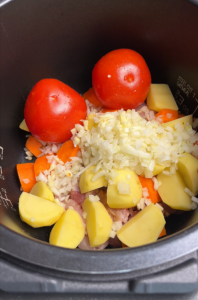
3. Add everything to the rice cooker
Add the vegetables into the pot, and place 2 curry cubes in the center. Add water.
Stir lightly to distribute everything evenly.
4. Start cooking
Cook using the regular rice cooking setting.
Depending on your rice cooker, this usually takes around 30–45 minutes.
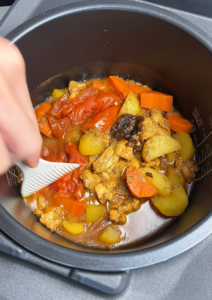
5. Add coconut milk
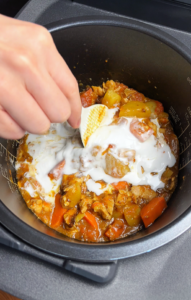
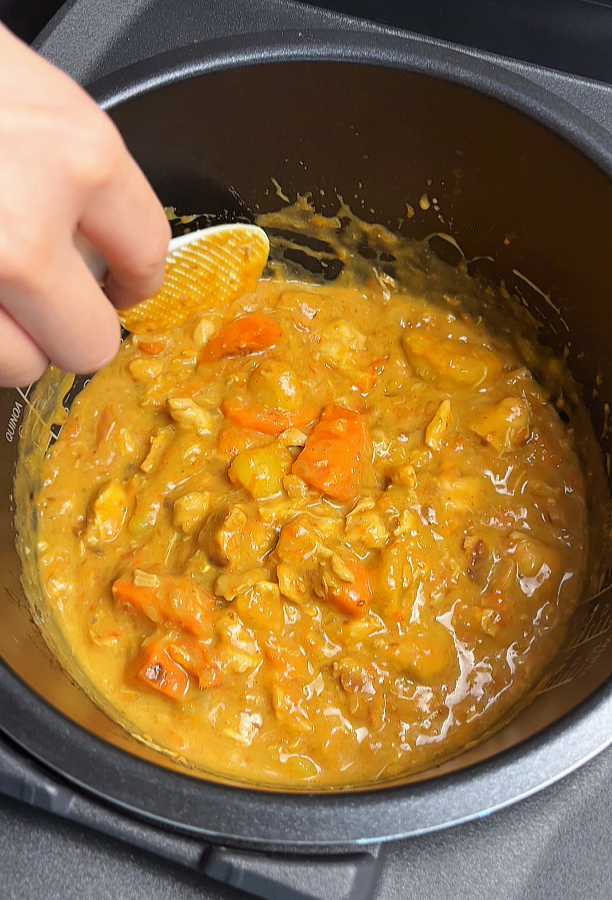
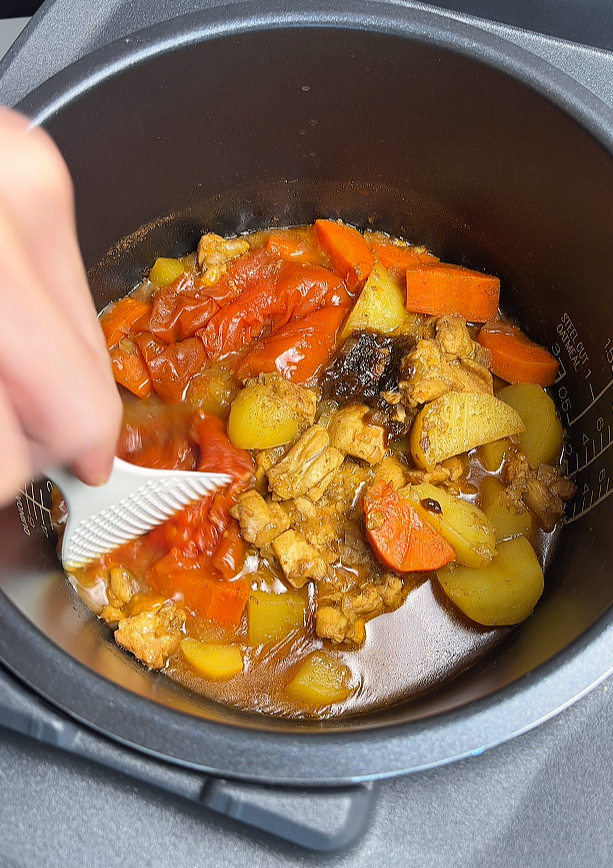
Once the cook cycle has completed, the vegetables are tender and the chicken is fully cooked. Pour in coconut milk.
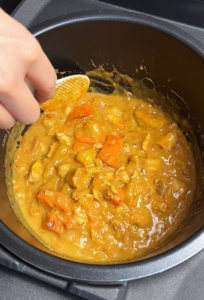
Stir well until the curry cubes fully dissolve into the broth.
6. Adjust thickness
If the curry feels too thick, add a splash of hot water.
7. Serve
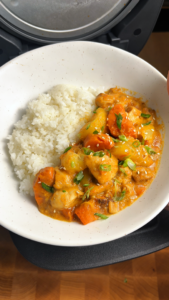
Scoop the curry over hot rice and garnish with green onions. Serve and enjoy immediately.
Easy Rice Cooker Japanese Curry Recipe (One-Pot Recipe)
Ingredients
Chicken
- 4 boneless Chicken thighs, cubed
- 1 tbsp Soy sauce
- 1 tsp White pepper
Vegetables
- 1 whole Red carrot, chopped
- 1 large Onion, diced
- 3 small Potatoes, chopped
- 2 small whole Tomatoes
- 2 cloves Garlic, diced
Curry
- 2 cubes Japanese curry
- 2 cups Water
- 1/2 can (200 mL) Full-fat coconut milk
Instructions
- Prep the vegetables:Cut the carrots and potatoes into large bite-sized pieces. Dice onions and garlic, and leave the tomatoes whole. Alternatively, use any vegetables of your choice.

- Marinate the chicken:In the rice cooker pot, combine the cubed chicken thighs with soy sauce and white pepper. Mix well and let sit for 5-10 minutes.

- Add everything to the rice cooker:Add the vegetables into the pot, and place 2 curry cubes in the center. Add water. Stir lightly to distribute everything evenly.

- Start cooking:Cook using the regular rice cooking setting. Depending on your rice cooker, this usually takes around 30–45 minutes.

- Add coconut milk:Once the cook cycle has completed, the vegetables are tender and the chicken is fully cooked. Open the lid and pour in coconut milk. Stir well until the curry cubes fully dissolve into the broth.

- Adjust thickness:If the curry feels too thick, add a splash of hot water.

- Serve:Scoop the curry over hot rice and garnish with green onions. Serve and enjoy immediately.